Sunday, March 13, 2016

A jail, a tale, a farewell - Ireland

This morning, Josh and I drove all the way across Ireland…. in a total of two hours.  The great part about driving this leg of the trip on a Sunday morning was that the only thing we had to slow down for was roundabouts.  Have I mentioned they have them everywhere?  They do.  By the hundreds.  They have every flavor of roundabout that I have yet seen across the world, from multi-lane ones a la Paris to ones with stop lights in the middle in the style of Washington D.C. (which defeats the purpose, right?).  Anyway, we arrived in Dublin with plenty of time to poke around.

We started our Dublin adventure at Kilmainham Gaol.  That last word is pronounced “jail” because, funnily enough, it was a jail for a century and a half.  
From 1799 until 1924, prisoners were housed in Kilmainham Gaol for a variety of offenses.  There were people who were deported via the jail (over 4,000 to Australia), people arrested for petty crimes, and a healthy dose of political prisoners (about 10% of the inmates most years).  
Interestingly, when it opened, the prison accepted both men and women, and women ended up in jail nearly as often as men did.  Until they stopped allowing women into the jail, over 40% of the inmates were women every year but one.  This has been attributed to the reduced economic opportunities for women, as well as the reduced marriage opportunities once all the healthy young lads fled Ireland after the Famine.  Ladies became ladies of the night because they couldn’t catch a break.  There was also a substantial rise in the number of inmates during the Famine, since the jail provided a shelter and at least a meager ration.  As George Bernard Shaw wrote, “If the prison does not underbid the slum in human misery, the slum will empty and the prison will fill.”  Guess what? He was right.  The final reason that occupancy increased was annual – the Donnybrook Fair, to be precise.  Drunken and disorderly behavior hit a peak each year during the horse fair and the jail got rowdy and full.  Ah, the Irish.  
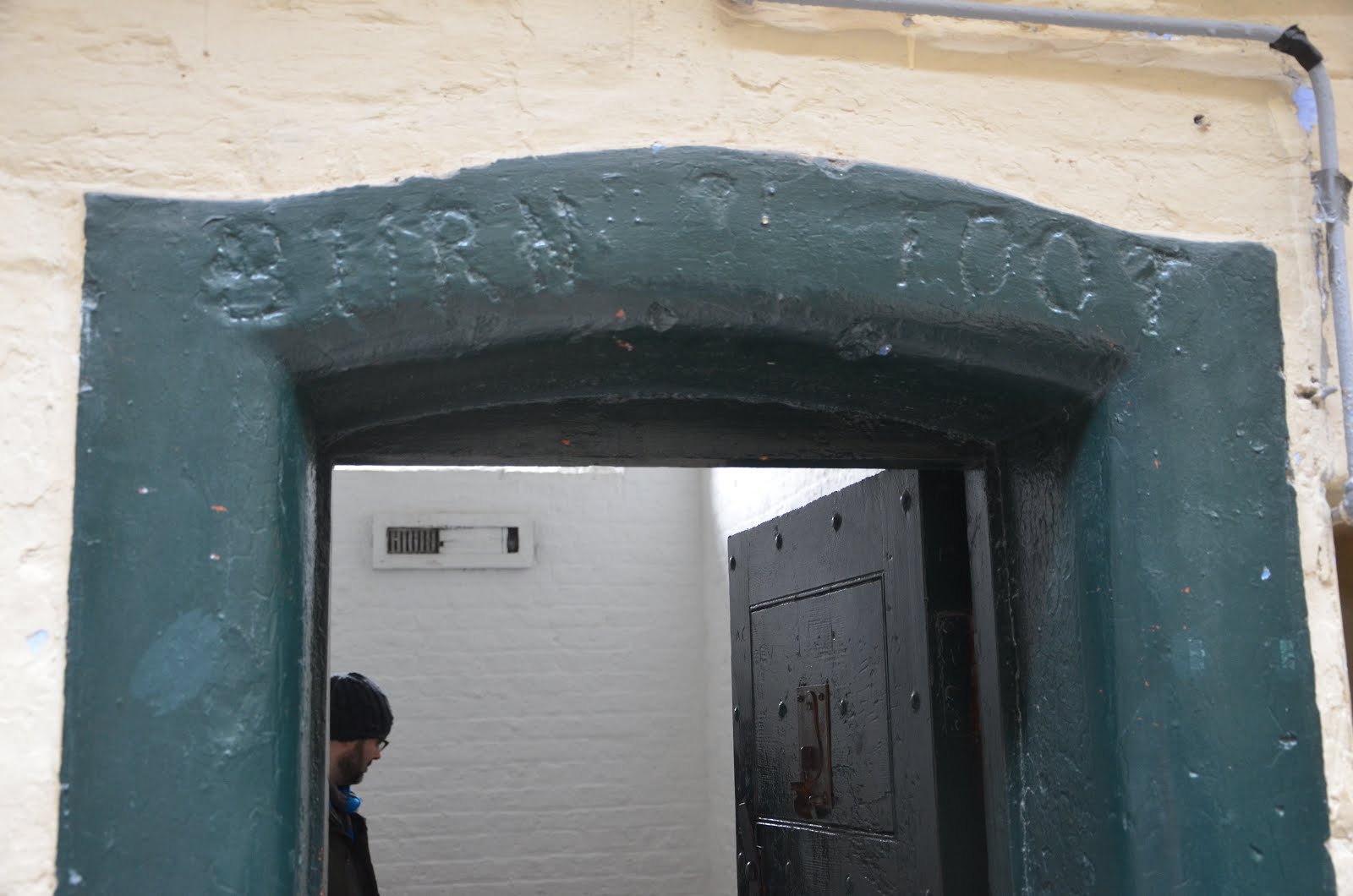
Anyway, the Kilmainham Gaol is most famous for its political prisoners, most of whom were involved in Irish rebellions against the British Crown.  The tour of the jail focuses largely on these inmates and their stories.  In fact, after the jail was abandoned in the 1920s, it was a former inmate (he was actually imprisoned there twice) who officially commemorated the 50th anniversary of its closure and reopened it to the public.  By that time, though, he had become the head of Ireland.  Definitely an interesting place to visit with a great tour.  Highly recommend!

Our next stop was another Dublin classic, Trinity College.
Though not as old as Dublin (founded 988 AD), Trinity College Dublin is still pretty darn old (founded 1592 AD).  Josh and I went on one of the student-led tours, which also included admission to the old library to see the Book of Kells.  Our student tour guide was HILARIOUS.  He described the boring naming of the squares, the numerous architectural mishaps over the years, the best and worst places to live on campus (only 800 of the 18,000 students can be housed on campus, but one of the buildings that you “luckily” get assigned requires running outside in your robe and queuing for the shower), and many other tidbits.  Josh and I were thrilled to see that they had a buttery, just like at Yale.
After the tour, we went to see the Book of Kells (no photography allowed) in the Old Library.
Fun fact: the books here are arranged not by author, title, or year of publication, but by size.  If you look at the shelves, you'll see they have different heights based on their contents.

Basically, the Book of Kells is a really, really old (approx. 9th century) illuminated manuscript in Latin that covers the four gospels of the Bible.  Between the numerous typos and the gorgeous, detailed decorations, they’re pretty sure it was just for show and not for everyday use.  It is beautiful, though.  The lavish decorations are so detailed that scholars wonder if they used some sort of magnifying lens as they worked on it.  The book is named after its home at Kells, in the county Meath.  However, it has found its home in Dublin since 1653.  It was sent there for safekeeping, which was no surprise since the buildings of the monastery at Kells burned down every 5-10 years for several decades around the 1000s and were pillaged several times.  It’s a wonder they didn’t send it over sooner, although perhaps early Dublin was a rough town.  Regardless, the manuscript is beautiful and I’m glad that monks had seemingly endless patience in the 9th century to do this kind of work.

Our plan was to head to the Christ Church Cathedral next, as it is just down the road from Trinity College.  
Alas, our arrival coincided with the 3:30 PM evensong and we were not allowed to enter. 

The final item on our agenda for the evening - and our trip to Ireland - was meeting up with two of my fellow students at a pub.  They have been traveling Ireland for two whole weeks and this was the one day that we overlapped.  Again, it was one of those evenings that stretched for hours until, at last, we had to head back to our hotel and grab some sleep.

(At least, that was the plan until we arrived at our hotel and found out that Sunday night is live music night at a spot right outside our window, so we will be up until at least midnight.  It's like the jetlag gods are trying to make us adjust.)

Until next time, Ireland.


Spotted:  Punny names!  Dublin establishments that have received the Jessica stamp of approval include Pitta Pan, Queen of Tarts, and Abra Kebabra.

Spotted #2: The 100th anniversary of the 1916 Easter Rising.  This was a major turning point in public opinion regarding the relationship of Ireland and Britain.  While the uprising didn't receive wide support, the perceived overreaction of the British in punishing those involved in the uprising helped the Irish people unite around independence.  We found out today that the Irish flag actually represents these dueling sentiments.  The green represents the revolutionaries who wanted to split from Britain, the orange represents those who wanted to stay loyal to the Crown, and the white represents the peaceful resolution of their differences.

Saturday, March 12, 2016

Eyes on You

Although this hasn’t been a particularly museum-heavy trip, today Josh and I decided to get away from the cities and head out to Connemara National Park.  
The land for the park was gathered from a variety of initial owners, including the Kylemore Abbey (a very beautiful place we passed it on the way to the park) and the founder of the SPCA, Richard Martin.  The park apparently boasts some interesting history, including megalithic court tombs (4,000 years old), but we were just there for the hiking.  So, up and up we went.

Since I will not do the beauty of Connemara justice, here are some words from a more poetic author: “Then there are the grand bare mountains,… with caprices of sunlight playing about their solemn heads, and shinig into their purple depths; and below are waters untraceable and incalculable.” (Harriet Martineau, 1852)
 
A pair of local hikers who started just before us seemed to know all the best photo spots, so we just took their lead as to when to turn around and appreciate the view.  The rest of the time was spent watching our step on the slippery rock steps.  This was particularly true as we neared the top and the wind picked up.  At that point, the fog was so thick it was impossible to see anything beside the rock, anyway.  After summiting, we picked our way back down the slope with care, pausing to watch some sheep forge their own path up the mountain.

Speaking of sheep, they are EVERYWHERE in Ireland.  We haven’t seen a vegetable farm yet (though that may be a function of the season), but there are fields full of sheep, cattle, and horses everywhere we go.  Out by Connemara, the human population density is even lower than normal and the sheep apparently roam free.  It was not unusual to see one of them munching the ungrazed inch or two of grass alongside the edge of the road, which is a bit spooky on roads with no shoulder.  The Connemara sheep also had another distinct feature: they were painted.  They all had a slash of bright color on their shoulders or – most commonly – their fluffy butts.  
Blue and red were most common, but we also saw green and one rebel sheep rocking purple.  We weren’t sure whether these markers were for identification of one farmer’s sheep versus another’s, making them more visible to passing cars, or both, but the sheep looked rather ridiculous.

Morning hike complete, we drove to Ashford Castle, a five star hotel (probably would be a ten star hotel if that existed) with gorgeous grounds.  

While posh guests were led around on horses or ran their dogs along the river, we wandered through the gardens back to the School of Falconry.  There, we met our guide, Ed, and began the most interesting afternoon of our trip.  We had guessed that there would be four or five birds, but they actually had at least 20.  The majority were Harris Hawks, the only social birds of prey and therefore the only ones that will fly with strangers.  
While they looked big and puffy as they sat on their perches, they only weighed 1.5-2 pounds.  The school also had a Peruvian Harris Hawk (the others are North American) whose beautiful speckled pattern distinguished her.  There were also two falcons – one peregrine and one peregrine-saker hybrid (basically the labradoodle of birds, meant to combine the speed and bird hunting abilities of a peregrine with the ground hunting abilities of a saker).  Behind them sat a tiny little guy named Napoleon who is a Merlin.  And then for fun there were two owls, including one named Dingle (more about him later).  After we had learned about a million cool bird facts from Ed, we put on our gloves and took out two of the Harris Hawks, Sonora and one with a Gaelic name that sounded like Fomer.  The hawks would fly into the trees and then, when we raised our arms, back to our gloves.  
Harris hawks can maneuver incredibly well, so we would have them weave through tree branches and brush to get to us, and they had no trouble at all.  The birds had clear personalities, even after only an hour with them.  Sonora managed to find some mushrooms up in a tree, which apparently she finds delicious, and Ed had to produce increasingly exciting treats (beef chunk < chicken leg < chicken head < quail wing < whole quail) to bring her back.  Similarly, at the end, Fomer got full and made it clear that he would have to be bribed back down.  The negotiation was hilarious to watch.  Ed, with elaborate pageantry, would wave around a treat and ceremoniously put it in one of our gloved hands.  Fomer would waggle his tail, betraying his interest, then turn his head to the side to feign disinterest, the bird equivalent of walking away while haggling.  Eventually, the bribery proved too powerful and he swooped down to join us.  After the hawks, we had a chance to fly Dingle, the beautiful owl.  
He had these incredibly expressive eyebrows that were all the way down when he was focused and hungry and gradually raised up as he became full, like a natural content-o-meter.  We learned that having the owls was sort of just for fun, since they aren’t good hunting partners.  They won’t allow you to swap their catch for a treat, so you can’t take their prey and eat it yourself.  Still, flying Dingle was a definite highlight.  Because owl vision isn’t great (unlike the hawks, whose visual acuity is 8-10x that of humans), Ed had to wave a treat right in Dingle’s face, then wrap an arm around him and run away from us (which looked like kidnapping every time as Dingle’s enormous eyes stared back) to get far away from us before Dingle broke away.  
Dingle would fly low to the ground before swooping up to our gloves and gulping down his treat. 
Between flights, we would try to pet Dingle’s fluffy feet.  Because of his poor vision, though, he would try to strike everything on the off chance that it was food, so you had to be quick.

Tired after a long day, we made our way back to Galway to rest up for our final day in Ireland.

Spotted: Ewes!  We’re not sure why, but the ewes have appeared in the last couple of days.  We didn’t see any until today, but now they’re in nearly every field, wandering around on tiny fluffy legs next to their mothers.  They don’t look young enough to have just been born, so perhaps they were kept separately until the recent warm weather.

Spotted #2: Fire assembly points/disaster preparedness.  This seems to be a huge priority in Ireland for unclear reasons, but everywhere we go there are signs for assembly points. Probably a great idea, but not something that we’re used to.

Friday, March 11, 2016

A Wild Ride on the Happy Hooker

Today was the day when nothing seemed to go right.  First, poor Josh woke up in the middle of the night with apparent food poisoning, although we had shared every dish and I emerged unscathed.  Next, when we did a final email check before leaving for the day, we found out that the ferry company with whom we had booked a trip had decided not to start running ferries until next week, despite allowing us to make a reservation the night before.  As a result, we relaxed a bit before finally leaving for the Cliffs of Moher... only to arrive and find that all of the power to the surrounding region had been cut.  The one car park for several miles either direction could not let people out, and therefore they also would not let us in.  We were advised to visit a surrounding town or park in one of the towns and walk an hour and a half back to see the cliffs.  We proceeded on to Doolin, the next town over, to explore a bit.  (Note: We later found out that the power couldn’t be restored in a timely fashion, so they had to saw through the railing arm to let people out of the car park.)

Once in Doolin, a tiny town on the west coast of Ireland, we wound around admiring the beautiful coastline
 and found ourselves at the pier.  Our ferry – the one that was cancelled – had been scheduled to leave from Doolin, so we were surprised to find that another company was still running rides.  We hastily booked a trip leaving in 10 minutes and climbed aboard our ship, which was ridiculously named The Happy Hooker.  
The day was a bit overcast but otherwise warm and our boat was packed with excited American tourists.  Excited yelps filled the air as our boat began to pitch on the waves, with the craft rolling over 20 degrees in either direction.  Over the course of an hour, we made our way out to the first of the three Aran Islands, where we disembarked.  
The tiny island had a cluster of houses near the dock, ruins standing tall and regal on the hilltop, and stone walls everywhere.  The stone walls were a mystery.  
They were maybe 3 feet tall and were arranged illogically all over the island.  Every plot marked out was a different size, but usually no more than 15x20 feet.  There were no entrances to most of these plots, no breaks in the walls.  And there were no houses on over 80% of these plots.  The walls simply made an abstract checkerboard out of the island.  Puzzling over this, Josh and I wandered around the island, admiring the coastline views and the old ruins.  We tried to see sea lions, but apparently they agreed with the locals that March was no time to live on the island.  Houses, beaches, and everything else stood empty.  It seemed as though the half dozen tourists were nearly the only people on the island.  I can’t imagine how isolated this place must feel during the depths of winter and how it must have been a couple of hundred years ago.  On a cuter note, when we returned to the dock to catch our ferry back, we met another couple our age who had been followed around the entire island by a very cute, very friendly dog.  It was unclear if it was a stray or belonged to someone on the island (they let their dogs just roam), but it apparently toured the island with the couple.

Josh on his island throne.

Our ride back to the mainland was a bit less pleasant than the ride out.  It began to drizzle, so we went inside the ship to chat more with the other American couple.  Being in the center of the ship was a mistake – the lack of fresh air and the increasingly choppy water left Josh and I both terribly seasick.  As a result, we skipped the Cliffs of Moher cruise immediately afterward and instead waddled, a bit green, back to our car.  The roads to Galway were similarly unforgiving – one was called Corkscrew Way – and so we were both a bit relieved to reach our hotel and lie down.


Luckily, we fully recovered by dinner, when we met up with Josh’s coworker and his girlfriend.  We headed to The King’s Head, the oldest pub in Ireland, for dinner and hours of good conversation.  In fact, there was so much good conversation that after dinner we wandered the city and then continued the evening at a local pub.  Nearly five hours after we met up, we finally parted ways for bed.  Galway is that type of place, though – a place to linger and laugh.

Spotted: Josh has a techno remix of Phantom of the Opera on his phone that he unabashedly loves.  I might have to marry him if I ever stop laughing.

Thursday, March 10, 2016

Aglow

We awoke this morning in Kilkenny, which boasts the nickname of “Ireland’s Tidiest Town”.  Since we had gotten in after everything closed yesterday, we wanted to explore our surroundings.  We started at Kilkenny Castle, which is probably the nicest and most completely restored castle that we will see in Ireland.  
As with many of the structures we’ve visited, it had multiple incarnations: it was a 12th century fortress, a 17th century chateau, and a 19th century stately home.  The current castle only has three walls, forming a U-shape.  It had a south wall that was destroyed by the forces of Oliver Cromwell, but I actually like it this way.  It is far more welcoming to its visitors and opens up onto its massive and perfectly maintained grounds, which all the locals use to walk their dogs and stroll with their strollers.  The castle has been owned by the national conservation society since the 1960s, when it was handed over for a nominal sum of 50 pounds.  It had been vacant for nearly half a century before that, though, with almost all of its contents auctioned in the 1920s.  After seeing the renovated version, however, it was hard to believe that the walls had gotten so bare.  The castle was beautiful, with hand-painted wallpaper from China and yellow silk wallpaper from France, hundreds of paintings hanging in the various rooms, and vast marble fireplaces.  Interestingly, during the restoration they were able to find receipts for some of the original items that had been removed and tracked down the companies that made the items… only to find that they still had the designs on file from the 17th century and could replicate their prior work.  Josh and I also learned that there were special display cases in sitting rooms to show off one’s expensive tea and special screens by the fireplace to prevent the wax makeup from melting off the guests’ faces.  I’m so glad that thick gobs of lead-laced wax is no longer how we’re expected to adorn ourselves.

After the castle, we wandered up the road to St. Canice’s Cathedral.  
Canice is a home-grown saint of Ireland and the site of her cathedral has hosted over 1500 years of worship, though the stone cathedral wasn’t started until 1202 (so young!).  Early on, monks here lived on porridge, nuts, and berries.  Once they were declared a royal monastery, however, the offerings improved immensely and they feasted on salmon and fine wine.  The round tower of the monastery is apparently a sign of prestige and boasts the best views of the city, though they were installing a hand rail today (I hope pre-emptively rather than in reaction to a tragedy), so we did not get to appreciate the vantage point.  
The self-guided tour of the cathedral, though, is fun and highlights some rather interesting history.  In a shout-out to Americans, they even note that the great great grand-uncle of President Obama is buried there.

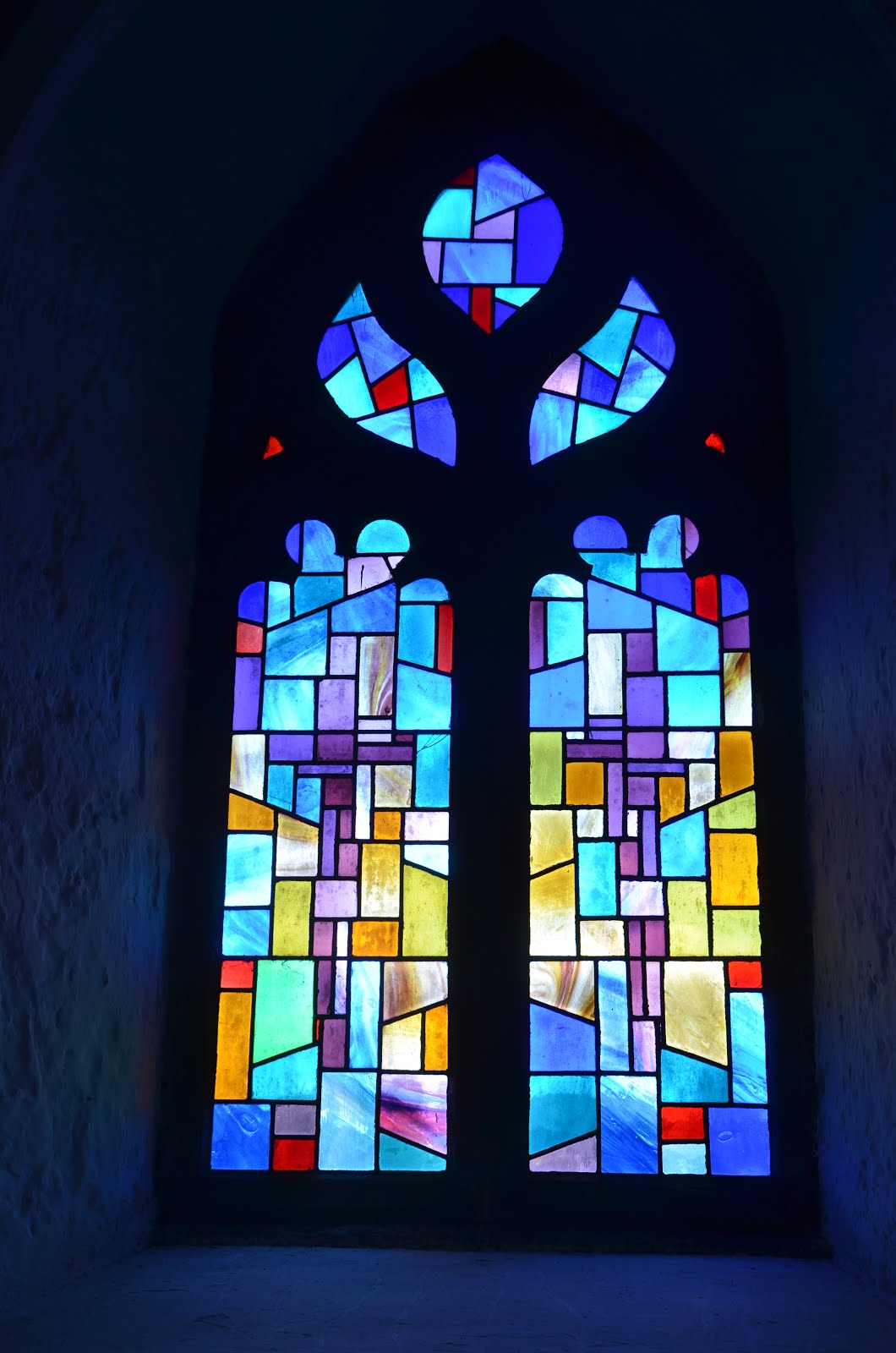
About a block from the cathedral is the Black Abbey, which (for tourist purposes) is basically one church.  What a church, though.  Stained glass probably decorates about 30% of the wall space, sometimes extending all the way from ceiling to floor.  In the midday light, it set the whole church aglow.

Unfortunately, midday also meant the end of our time in Kilkenny.  The town grew on us as we stayed there; it had just enough of everything: food, history, entertainment, street markets, friendly strangers.  Still, our wanderlust beckoned us to our stop: Dunmore Caves.  

The caves are the oldest in all of Ireland, though once there we learned that there are actually quite a view caves eroded into the limestone deposits around the country.  We descended over 700 steps down into the cavern, whose arched mouth opened up about 3500 years ago, revealing the existence of the cave system.
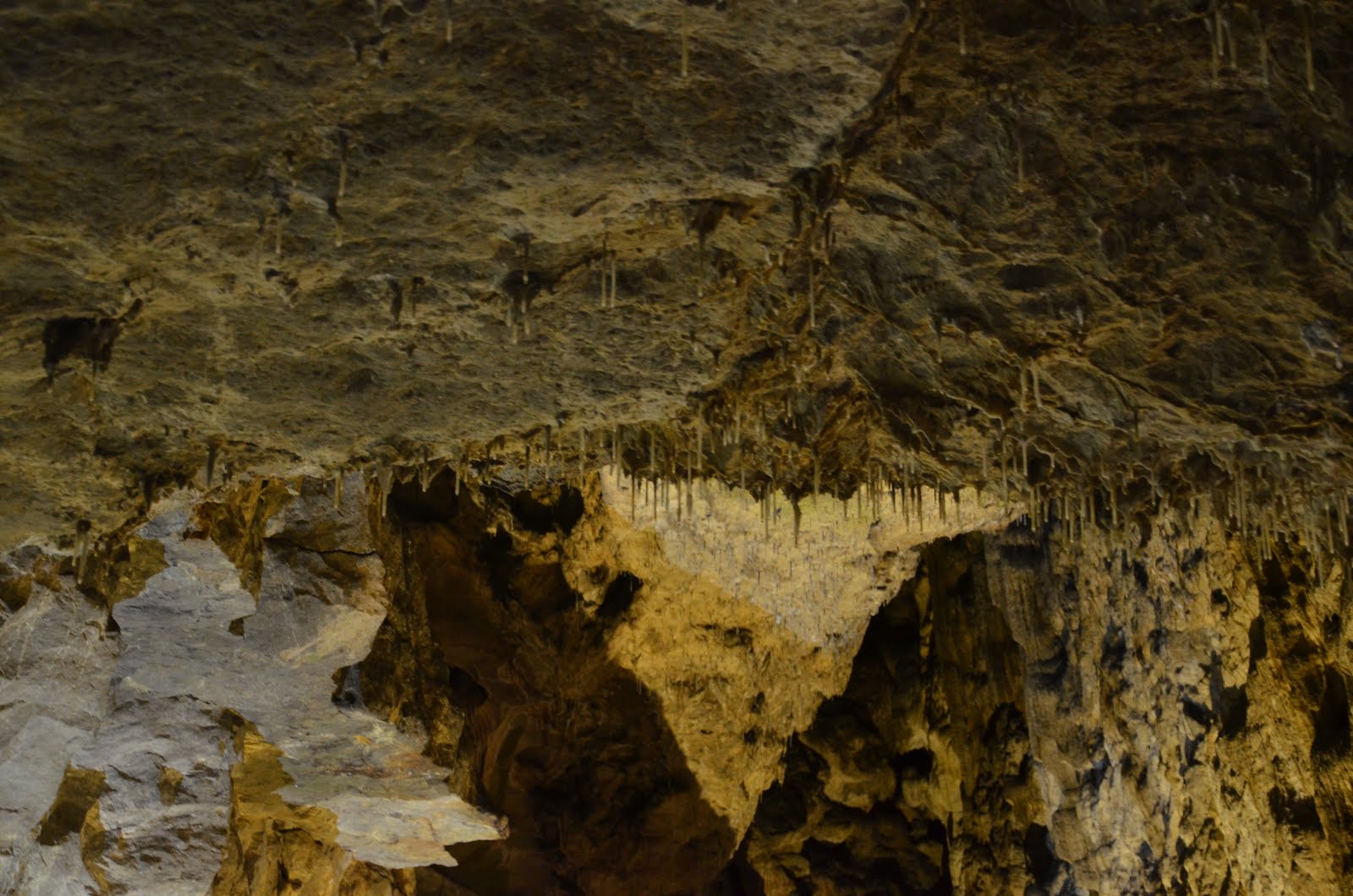
The caves were dark, drippy, and chilly, but it was very cool.  In particular, it was interesting to see how dynamic they were. We could see where the drip drip drip from the ceiling was indenting the paths or building up small stalactites.  From the guides, we learned that the thousands of tiny stalactites hanging from the ceiling were each 6 mm in diameter because that was the width of a single drop of water.  
We also learned that this cave is the only one mentioned in ancient Irish poetry, where it was called the gateway to the land of the dead, the lair of a giant cat-like monster, and the location of a massive slaughter.  The last attribution, it seems, is true; the Danish Vikings massacred the Dublin Vikings around 928 AD and their remains were found in the caves.  History was terrifyingly violent.
This formation is called "The Buffalo"

After Dunmore, it was on to Limerick for our lodgings.  We explored the city on foot, sampled some local pub cuisine (Irish stew!), got served our tap water in an old Irish whisky bottle, and managed to catch the Liverpool-Manchester United game in a pub alongside some fairly rowdy locals.  Achievement unlocked!

Fun fact: 5 species of bats live in the Dunmore Caves.  They hibernate 5 months a year, lowering their body temperature from 37 to 10 degrees Celsius and their heartbeats from 100 to 5-20 beats/minute.


Spotted: Very thick hedges!  These (unnatural) natural fences are everywhere and SO THICK.  From the passenger seat of the car as we drive on narrow, windy roads, I have gotten uncomfortably close to these hedges and can vouch for their incredibly density.

Spotted #2: Our first Irish rainbow!  We tried to follow it but, alas, it got away!

Wednesday, March 9, 2016

We're Cahir!

Fáilte go hÉireann!

On Wednesday morning, Josh and I arrived bright and early on the Emerald Isle – and it was quite easy to see how this country got its nickname.  As soon as we left the airport, the countryside spread out before us and everything looked unbelievably lush.  It was hard not to be excited when we were surrounded by so much beauty.  We had decided to save Dublin for the end of the trip and instead headed southwest out of the city.  Rowers take note: on our drive, Josh assessed the waterways here as remarkably straight and therefore perfect for rowing.  Good thing I didn’t let him pack any oars, or we’d never get to explore the land.

Our first stop was Holy Cross Abbey, which provided a humbling reminder that “old” suggests a very different time period when used in Western Europe.  
A grant from King Donal endowed an abbey for Cistercian monks in the land of his mother’s people, the O’Fogartys (just wait, more awesome Irish names to come).  The Abbey was well-known for supposedly holding a piece of the cross on which Christ was crucified; this relic inspired pilgrims to visit the abbey for centuries.  Unfortunately for the monks, the abbey’s existence depended on the favor of those in power, and by the 1500s, abbeys were no longer in vogue.  Henry VIII decreed that monasteries were either too wealthy or not wealthy enough – the guy was hard to please – and therefore they should be closed.  The Holy Cross Abbey managed to survive a bit longer by handing over its ownership to a married layman, but this was not a permanent solution.  The monks retreated to private residences for 15 years, and when they returned, the abbey was in ruins.  They soldiered on, but the abbey was again plundered in 1690.  Eventually, in the late 1800s, Holy Cross was transferred to the state as a national monument.  
While it continues to provide a cool, quiet respite from the troubles of life, the lesson of its history was clear: in any age, it’s pretty terrible to be at the mercy of those in power.

Next, we journeyed to the Rock of Cashel, which is really a cathedral atop a hill and not just a rock, as I initially assumed.  (Hey, there are a lot of famous rocks around the world.)
At least, that’s what currently remains.  At first, it was another residence for Cistercian monks, just like Holy Cross Abbey, but its use evolved over the years.  When the Norman knights stormed through the country, they destroyed what was originally there and a new stone cathedral in the Gothic style was erected.  
When the Plague decimated the local population, this site eventually fell into disrepair.  The paintings on the ceilings and walls wore away and stone crumbled.  What remains, however, is still magnificent.  And since it’s on a hill, the views are beautiful!

Our last tourist stop of the day was Cahir Castle.  
This castle was the site of a major siege, which is outlined step-by-step in a dedicated room.  They even have a model with buttons for each notable battle stage that light up that part of the model.  Thousands of tiny British soldiers march in formation towards the river, across the river, and into the castle.  Eventually, the castle was given up and its guarding garrison was spared.  Much of the castle remains, making it was easy to imagine the banquet hall getting rowdy or the occupants crowding around the massive fireplaces during the cold winter months... and, of course, defending themselves using the dropping gates, murder holes, and arrow slits.


With the long day catching up to us, we headed to Kilkenny for the night.  Our hotel parking lot was – amusingly – filled with all Dooley rental cars, suggesting that many of the guests were using the same deal as us.  However, since it is still the off season, both the parking lot and the sites that we had visited were remarkably empty.  Similarly, when we headed out to Café Sol for some fine dining, we were able to walk in without difficulty.  Café Sol was wonderful.  My praise for it can be summed up as: they not only made me realize that beets can be edible, but that they can be exquisitely delicious.  I spent the walk home craving beets.  Surely witchcraft was involved.

Our first day in Ireland felt like it had a dusting of magic.  The landscapes were achingly beautiful, the lilting accents made you want to eavesdrop, and everyone was so kind.  Plus, a place like this really makes you love history.  Can’t wait for day two!

Spotted: A “Visit Baltimore” sticker.  Probably the last thing that Josh and I expected to see our first day on the road.


Spotted #2: Josh being a pro driver on the wrong side of the road almost instantaneously.  Thank god he learned to drive a manual transmission car.

Spotted #3: Thatched roofs!

Tuesday, March 17, 2015

Ode to the Octopus

Today was our last day in Athens, and the street market and Plaka felt a little bit like a ghost town.  True, it was mid-morning on a Tuesday, but it just drove home that this is the off season.  Clearly, the numbers on the weekends are driven by domestic tourists on weekend trips and the locals who venture down to these bustling restaurants and markets.  

We walked all the way to the Archaeological Museum, about 45 minutes away, savoring the sunshine.  Josh was also looking for his next donut, as he was delighted to discover that they are sold on street corners here.  We had high hopes for the Archaeological Museum, which gets rave reviews, and it did not disappoint.  The first room was utterly magnificent and was worth the price of admission by itself.  Gorgeous gold leaf decorated statues as headdresses, hair, inlay on daggers, everything.  
A single one of the cases was noted to hold over 30 lbs of gold foil - and there were over a hundred cases in the room (though not all filled with gold).  The detail of these pieces was also incredible.

The rest of the museum was mostly filled with statues and pottery, some dating back to 7000 BC.  The oldest pieces include tiny, primitive sculptures of women with either stout or violin-shaped bodies.  The contrast between these early pieces and the later sculptures is striking.  Things have come a long way. My favorite statue was this one, a korai (female figure).  The drape of her chiton (tunic-like robe) is perfect, and I loved the detail on the robe (there are shapes etched in and painted, if you look closely), the belt, her necklace - everything.  She also retained some of the paint used to decorate the statue, which I hadn't seen before.

A few other notes on the museum:
(1) There were pictures of octopuses* everywhere, and I loved them all.
(2) The first traces of olive oil were found in a lamp on the Cycladic Islands and are over 3000 years old, and that lamp is in the museum.
(3) Large chunks of the museum were unfortunately roped off, which was unfortunate, and one of the large rooms was under renovation.  Still, there was plenty to appreciate, especially in combination with all the other sites and museums that we have seen.  The collections in Greece have complimented each other nicely, often referring to one another as displaying a particular piece.
(4) The museum has a beautiful courtyard downstairs.  Especially in the summer, I could imagine relaxing there for a few hours.

On the way to our afternoon museum plans, we crossed a few other foods off our Athens bucket list.  First, we stopped at a Caffe Vergnano to buy calzones, which were utterly delicious (try the veggie one!).  As soon as we had purchased these, we realized that one of the restaurants we had been eager to try, Falafellas, was just a few doors down.  So... we got lunch immediately after our calzone snack.  The line was quite long, but the wait was worth it.  
I got a pocket and Josh got the giant size, and we oohed and aahed over all the things that they stuffed into our meals.  The falafel not only included falafel balls and tahini, but lettuce, tomato, cubes of grilled eggplant, cucumber slices... it was glorious.  Every bite was incredible.  And cheap!  If they had one of these in Baltimore, I would probably eat there every day.

Our second museum of the day was the Acropolis Museum.  
This museum is only about a decade old, and a lot of the final touches were added around 2010.  The Museum isn't huge, but it does a good job of guiding you through the remaining statues and carvings from the Acropolis.  As mentioned in a previous post, those that remained intact were suffering mightily from the smog, so they have been moved into the museum and (in some cases) replaced with casts.  We saw a cool video on how they have restored a lot of these pieces using a specially-designed laser technique to zap soot without harming the marble.  Anyway, the museum starts with a ramp up to the first main floor.  Along the ramp on both sides are four rows of objects.  On the right side are pieces of pottery and small statues from the area.  Below your feet are glass panels showing the excavation site beneath; the museum sits atop the excavation of the town at the foot of the Acropolis.

The left side was where things got interesting, because it was material that we hadn't seen or heard before.  It discussed all the wedding rituals in ancient Athens.  Weddings were three-day affairs, including not only the day before the wedding but the day after.  The day before (proaulia), a sacrifice was made to the gods.  The bride also offered her childhood toys the Artemis as a sign of passage into adulthood as a married woman, which I thought was pretty interesting.  The next day - the day of the wedding - the ladies bedazzled the bridge.  The groom had a best man (I wonder if they laughed at childhood shenanigans during his speech?), and together with the groom's whole family they went to the house of the bride.  There was a huge feast and afterwards, the bride was unveiled.  This unveiling marked her passage into the custody of her husband, and at dusk she was led to the home of her groom.  They occasionally went by carriage (probably not dragging cans, but possibly bearing a "Just Married" sign?) and were surrounded by singing and dancing relatives.  When the bridge got to the groom's house, the groom's parens rained walnuts, figs, and coins down on the bridge, and they devoured their first sweets as man and wife (sort of like we eat cake?).  The next day (epaulia), the bridge received visitors in her new home, and everyone brougth a gift.  The same day, her dowry was given to the groom, often including money, furniture, clothing, precious objects, and slaves.  What was so striking to me about all of this was how little things have changed.  Sure, it would be really awkward if my dad showed up the day after my wedding and gave someone slaves (something I absolutely cannot imagine him doing), but the bedazzling, the feast, the unveiling, the carriage?  The order may have changed a little bit, but a lot of the elements are still there.

Anyway, back to the main point of the museum: the Acropolis.  At the end of the ramp is the first main floor, which houses sculptures from around the Acropolis.  I wasn't allowed to take pictures after this point, so I'll try to paint a picture.  The museum uses a very modern, open floor plan.  The walls are stark white or sheer plates of glass, letting in a lot of natural light and providing views of the Acropolis, theater of Dionysus, and surrounding city.  Statues are arranged around the floor, so you sort of squeeze your way between them as you explore the exhibit.  There are statues of young men (kouroi), Zeus, Hercules, and obviously a ton of Athena.  The descriptions of each peice are short, but the historical context provided at various points throughout the exhibit was invaluable.  Up two floors (the middle floor is a restaurant), the third floor is basically the Parthenon away from the Parthenon.  The entire floor is built to be a large rectangle the size and shape of the inner columns of the Parthenon, with a outer rectangle to represent the outermost columns.  Along these two rectangles are placed all of the carvings that would have sat atop the rows of columns.  Most of the metopes - rectangular slabs of marble depicting scenes of battle or other stories - have been preserved, and they were placed in order, showing that each side of the Parthenon had a different theme (i.e. the birth of Athena out of Zeus' head, or Greeks vs. Amazons - strangely the Amazons always seemed to be winning).  It was a really amazing way to experience the Parthenon.  We were slightly skeptical of some of their recreations, wondering how they could know so much about scenes that were defaced by the Christians, fragmented by the Venetians-attacking-Turks explosion, or which were simply missing.  It turns out that detailed drawings were made in 1674, just a few years before the Venetian Explosion Incident.  This and ancient texts describing the Pathenon have allowed them to piece things back together.

While all of this was impressive, I think that Josh's favorite part of the museum was what we stumbled upon on our way out:
Lego Acropolis!  It was made by a group in Australia, and it includes all of the different parts of the Acropolis, from the theaters to the Porch of the Caryatids.  It also melds ancient and modern characters, so you see Roman soldiers hanging out as well as Elton John performing in the Odeon of Herodes Atticus.  I'll admit, it was a pretty amazing reconstruction.  As one little kid pointed out, though, they didn't include enough stray cats.

Spotted: Money scanners.  A lot of businesses - from the grocery store to Falafellas - scan every bill that they are given before accepting it.  Perhaps counterfeit money is a big problem?

Spotted #2: According to the Acropolis Museum, in Greek statues, blonde hair indicated a god or goddess, while white skin represented grace and purity.  I guess I would have been a graceful goddess!

*From the internet: There are three plural forms of octopus: octopuses [ˈɒktəpəsɪz], octopi [ˈɒktəpaɪ], and octopodes [ˌɒkˈtəʊpədiːz]. Currently, octopuses is the most common form in the UK as well as the US; octopodes is rare, and octopi is often objectionable.